India’s auto market is changing fast. Rising fuel prices, stricter emission norms, and growing awareness about sustainability are pushing buyers to look beyond traditional petrol and diesel vehicles. The big question many people are asking now is simple: which makes more sense for Indian roads, hybrid cars or electric cars?
If you’re trying to understand the real difference in the hybrid cars vs electric cars debate, this guide breaks it down clearly, without hype or technical overload. Let’s look at what actually matters for Indian buyers, from costs and infrastructure to daily practicality.
Understanding the Basics
Before comparing, it helps to know what each type really is.
Hybrid cars use a combination of a petrol engine and an electric motor. The battery charges automatically through regenerative braking and the engine itself. You don’t plug it in. The car switches between petrol and electric power to improve fuel efficiency.
Electric cars (EVs) run entirely on electricity. There’s no engine, no fuel tank, and no exhaust. You charge the battery using a home charger or a public charging station.
What this really means is simple. Hybrids reduce fuel consumption. Electric cars eliminate fuel altogether.
Purchase Price and Running Costs
Let’s talk about the part most buyers care about first, money.
Upfront cost
-
Electric cars still cost more initially, mainly due to battery costs.
-
Hybrid cars, especially strong hybrids, are also priced higher than regular petrol cars, but in many cases they are slightly more affordable than EVs in the same segment.
In India, entry-level EVs are becoming more affordable, but the selection is still limited compared to petrol or hybrid options.
Running cost
-
EVs are much cheaper to run. Charging at home costs significantly less than buying petrol.
-
Hybrids still use fuel, but their mileage is far better than conventional cars, especially in city traffic.
If your daily driving is high, an EV can recover its higher purchase price over time. If your usage is moderate, the savings gap becomes smaller.
Charging and Refueling Convenience
Here’s where the hybrid cars vs electric cars comparison becomes very practical.
Electric cars
-
Need charging infrastructure.
-
Home charging works well if you have a dedicated parking space.
-
Public charging networks are growing in major cities, but coverage is still uneven across India.
-
Long-distance travel requires planning around charging stops.
Hybrid cars
-
No charging required.
-
Refuel at any petrol pump.
-
No range anxiety.
-
Ideal for people who travel frequently or live in areas without reliable charging access.
Let’s break it down. If you live in a metro city with home parking, EV ownership is manageable. If you live in an apartment without dedicated charging or travel often between cities, hybrids are far easier to live with.
Driving Range and Daily Use
Range anxiety is still one of the biggest concerns for Indian buyers.
Electric cars
-
Most affordable EVs offer a real-world range of 200 to 350 km per charge.
-
Premium models offer more, but at a higher price.
-
Great for daily city commutes.
Hybrid cars
-
Similar range to petrol cars.
-
Total driving range can exceed 700 to 900 km with a full tank.
-
No dependency on charging time.
What this really means is that EVs work best for predictable daily routines. Hybrids offer flexibility for both city driving and long highway trips without any planning.
Maintenance and Reliability
This is an area where electric cars have a clear advantage.
Electric cars
-
Fewer moving parts.
-
No engine oil, clutch, or gearbox in the traditional sense.
-
Lower maintenance costs over time.
Hybrid cars
-
More complex than regular cars because they have both an engine and an electric system.
-
Maintenance costs are lower than petrol cars in some cases, but not as low as EVs.
Battery life is a concern for many buyers. Most manufacturers now offer battery warranties of 8 years or more, which makes ownership less risky than it once seemed.
Environmental Impact in India
Both technologies aim to reduce emissions, but the context matters.
Hybrid cars
-
Lower fuel consumption means lower emissions.
-
A practical step toward cleaner mobility, especially where charging infrastructure is limited.
Electric cars
-
Zero tailpipe emissions.
-
Overall environmental benefit depends on how electricity is generated.
-
As India increases renewable energy in the grid, EVs will become even cleaner.
Here’s the thing. In Indian conditions, both options are cleaner than traditional petrol and diesel vehicles. EVs offer the biggest long-term environmental advantage.
Government Policies and Incentives
Policy support plays a big role in this shift.
-
Electric cars receive stronger incentives under schemes like FAME and state-level subsidies.
-
Many states offer benefits such as lower road tax, registration fee waivers, and reduced electricity tariffs.
-
Hybrids, especially strong hybrids, receive limited incentives compared to EVs.
What this really means is that the government is clearly pushing toward full electrification, even though hybrids remain a practical transitional option.
City Driving vs Highway Driving
Your driving pattern should guide your decision.
Best for city use
-
Electric cars shine in stop-and-go traffic.
-
Instant torque makes driving smooth and quiet.
-
Regenerative braking improves efficiency.
Best for mixed or highway use
-
Hybrids offer better convenience for long-distance travel.
-
No need to worry about charging availability between cities.
If your daily driving is mostly within city limits, an EV makes strong financial and practical sense. If your usage includes frequent highway trips, hybrids offer peace of mind.
Availability of Models in India
The market is expanding, but the options differ.
Electric cars
-
Growing selection in compact and mid-range segments.
-
Still limited choices in premium SUVs and larger vehicles.
Hybrid cars
-
Available mainly in mid-size sedans and SUVs.
-
Strong hybrid technology is offered by a few manufacturers but gaining popularity.
Buyers looking for a wider body style range may currently find more flexibility with hybrids, though EV options are increasing every year.
Resale Value and Market Perception
Resale value is still evolving for both technologies.
-
Hybrids currently hold value reasonably well due to familiarity and fuel savings.
-
EV resale depends heavily on battery health and future technology improvements.
-
As the EV market matures, resale stability is expected to improve.
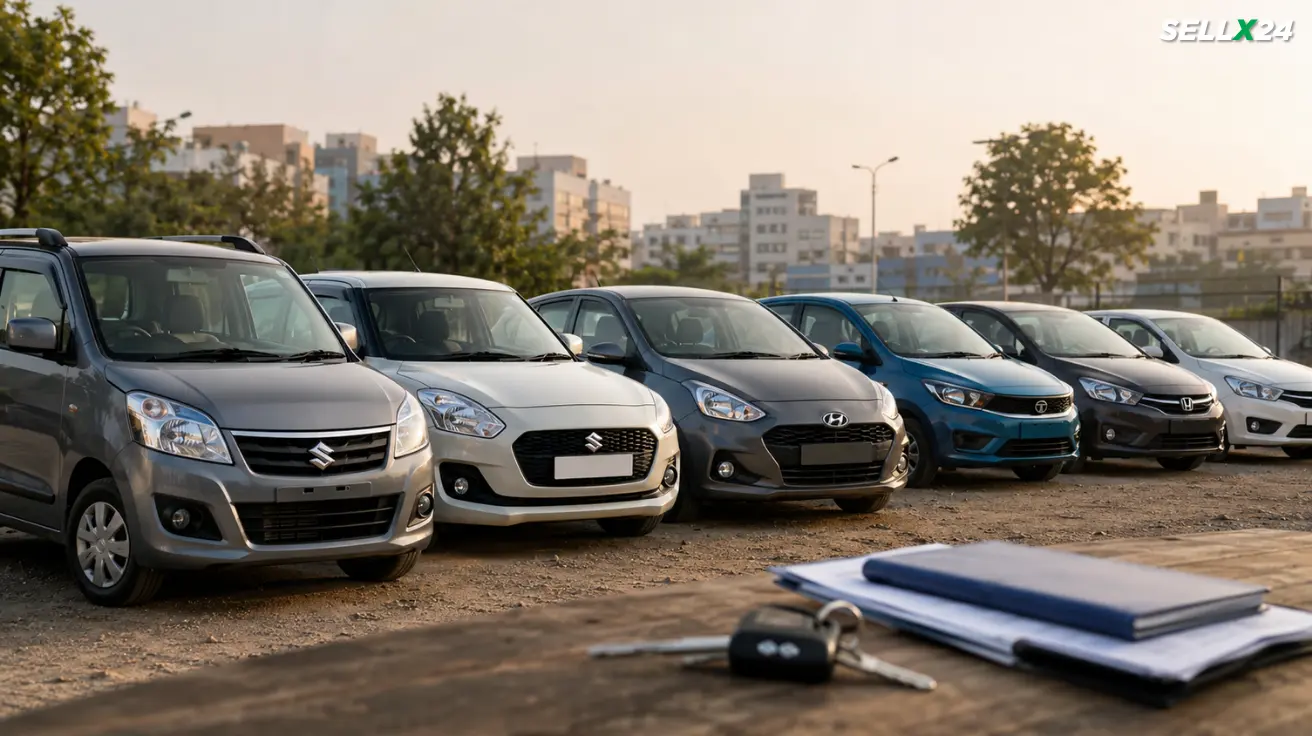
For buyers considering the second-hand market, well-maintained used cars with hybrid technology may offer a balanced entry point into fuel-efficient mobility.
So, Which One Should You Choose?
Let’s simplify the decision.
Choose an electric car if:
-
You drive mostly within the city.
-
You have home charging access.
-
Your daily running is high.
-
You want the lowest running cost and minimal maintenance.
Choose a hybrid car if:
-
You don’t have reliable charging access.
-
You travel frequently between cities.
-
You want better fuel efficiency without changing your refueling habits.
-
You prefer flexibility and zero range concerns.
Also Read: Smart Hybrid vs Strong Hybrid: Maruti Grand Vitara Breakdown
The Future of Mobility in India
India’s long-term direction is clearly toward electrification. Charging networks are expanding, battery costs are falling, and more models are entering the market every year.
At the same time, hybrid technology plays an important role today. It offers a practical bridge between traditional fuel cars and full electric vehicles, especially in regions where infrastructure is still catching up.
The hybrid cars vs electric cars discussion isn’t about which technology is better in absolute terms. It’s about what fits your lifestyle right now.
If charging access and predictable daily driving are part of your routine, EVs make strong economic and environmental sense. If flexibility and long-distance convenience matter more, hybrids remain a smart and practical choice.
The shift toward cleaner mobility is happening. The real decision is how fast you want to move with it.