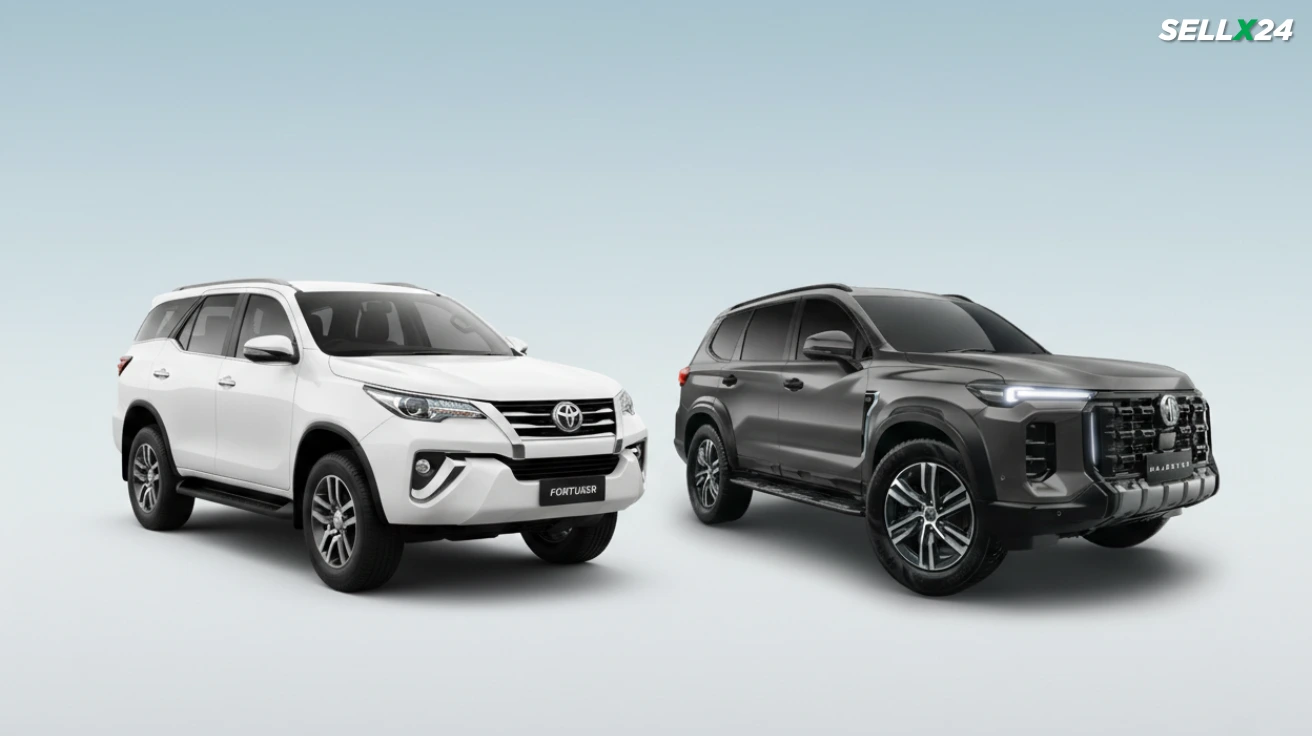
If you’re torn between the MG Majestor and the Toyota Fortuner, you’re basically choosing between a tech-loaded new-age diesel SUV and a proven body-on-frame legend with massive brand trust. Let’s break it down with real numbers so you can see which one actually fits your use case in India.
MG Majestor vs Toyota Fortuner: key specs at a glance
Here’s the thing: both are full-size, ladder-frame, 7-seater SUVs aimed at buyers who want presence, space, and serious highway and rough-road ability. But they approach the job quite differently.
- MG Majestor is MG’s new flagship D+ segment SUV in India, based on the Maxus D90/Gloster, with a focus on space, features, and a powerful twin‑turbo diesel.
- Toyota Fortuner is the segment benchmark, with strong resale, reliability, and wide service reach, offered with both petrol and diesel engines.
Dimensions, ground clearance and road presence
If size and cabin space matter to you, Majestor has a clear edge.
- MG Majestor length: 5046 mm, width: 2016 mm, height: 1876 mm, wheelbase: 2950 mm.
- Toyota Fortuner length: 4795 mm, width: 1855 mm, height: 1835 mm, wheelbase: 2745 mm.
What this really means is the Majestor is longer, wider, and taller, with a much longer wheelbase, so you get more legroom and a more airy cabin, especially in the second and third row.
Now, ground clearance:
- MG Majestor ground clearance: around 219–230 mm, depending on source and final spec.
- Toyota Fortuner ground clearance: 220–225 mm listed, typically quoted at 225 mm.
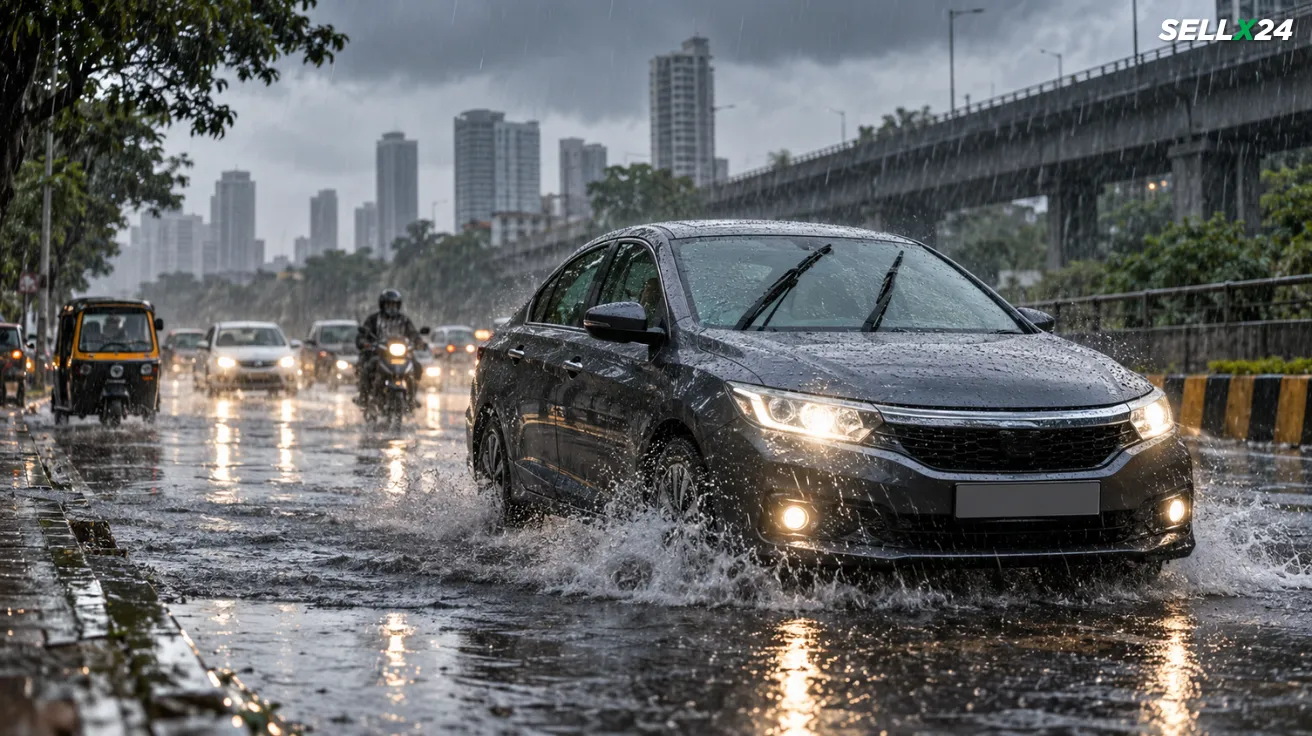
In practice, both clear Indian speed breakers and rough roads without drama. The Fortuner is marginally higher on paper, but Majestor counters with a taller water wading capacity of about 810 mm versus around 700 mm for the Fortuner, which helps in monsoon and mild off‑road water crossings.
Boot space and practicality
If you carry family, luggage, and sometimes fold rows for airport runs or road trips, boot space matters more than people admit.
- MG Majestor boot space with all three rows up: about 340–343 litres.
- MG Majestor boot space with third row folded: up to about 1350 litres.
- Toyota Fortuner boot space with all rows up: 296 litres.
- Toyota Fortuner boot space with third row down: around 716 litres.
Here’s the thing: with all seven seats in use, Majestor simply gives you more usable luggage space. That matters if you run full-house often. With the third row folded, Majestor again offers a much larger cargo bay, thanks to its longer body and wheelbase.
So if your typical use is: 5–7 people plus big suitcases, camping gear, strollers, or dog crates, Majestor is the more practical hauler.
Fuel tank, range and touring ability
On pure tank size, Fortuner hits back.
- MG Majestor fuel tank capacity: 75 litres.
- Toyota Fortuner fuel tank capacity: 80 litres.
A 5‑litre advantage may not sound huge, but on long highway trips it translates into slightly fewer fuel stops for the Fortuner, especially with its proven diesel efficiency. For most buyers though, Majestor’s 75‑litre tank is still more than enough for serious intercity touring.
Engine, performance and drivetrain
This is where the character of these SUVs really separates.
MG Majestor engine and drivetrain
- 2.0‑litre twin‑turbo diesel, expected around 215–216 hp and 470–480 Nm (essentially the Gloster’s tune).
- 8‑speed automatic gearbox.
- Rear‑wheel drive and all‑wheel drive options.
The twin‑turbo setup gives strong mid‑range torque and relaxed highway cruising, and paired with the 8‑speed auto, Majestor is tuned more for effortless, refined progress than aggressive punch.
Toyota Fortuner engine and drivetrain
- Diesel: 2.8‑litre four‑cylinder, widely known in India, with strong torque and proven reliability.
- Petrol: 2.7‑litre four‑cylinder for buyers who don’t want diesel.
- Manual and automatic gearboxes, 4x2 and 4x4 options.
What this really means is Fortuner gives you more powertrain flexibility: petrol or diesel, manual or auto, rear‑wheel drive or 4x4, depending on your budget and usage. The diesel Fortuner is known for solid low‑end torque and consistent performance under load, whether you’re climbing hills or towing.
If you want a single powerful diesel with lots of tech and a smooth 8‑speed auto, Majestor makes sense. If you care about multiple engine/gearbox choices and long-term familiarity in the market, Fortuner still has the edge.
Features, comfort and interiors
Majestor is coming in hot as a feature-loaded flagship, while Fortuner leans more on toughness and brand reputation.
MG Majestor cabin and features
- 7‑seater layout with leatherette upholstery, premium soft‑touch materials.
- Expected dual-screen layout, panoramic sunroof, three‑zone climate control, powered tailgate, premium audio, multiple wireless chargers.
- Advanced off‑road kit on higher variants: triple differential lock, terrain modes, crawl functions, and serious water wading capability.
The feel is more premium and tech-forward, closer to a luxury SUV experience at this price point.
Toyota Fortuner cabin and features
- 7‑seater layout, good build quality, but more conservative design.
- Features include touchscreen infotainment, connected tech on some variants, powered seats, and multiple airbags, but it doesn’t chase screen size and gimmicks as hard.
- Strong focus on durability and ease of use rather than wow factor.
So if your priority is plush interiors, big screens, and a sense of “new” from the driver’s seat, Majestor feels more special. If you prefer something simple, proven, and easier to live with over 8–10 years, Fortuner’s cabin philosophy may appeal more.
Price in India and value
Now to the part that usually decides everything.
- MG Majestor expected/announced ex‑showroom price range: roughly ₹39.5–45 lakh depending on variant, with some sources suggesting higher on-road ranges once top-spec 4x4 and options are factored in.
- Toyota Fortuner ex‑showroom prices (diesel and petrol) typically sit in the mid‑₹30 lakh to ₹50 lakh band, depending on variant, drivetrain and region, with the Legender and GR‑style variants commanding a premium.
Here’s the thing: MG is clearly positioning Majestor as a value-loaded Fortuner rival. For similar or slightly lower money versus higher Fortuner variants, you’re getting:
- Bigger body and more interior space.
- More boot space with all three rows up.
- More features and a more premium cabin.
But Fortuner hits back with:
- Massive resale value over 5–10 years.
- Extremely strong brand image and demand in the used market.
- Dense Toyota service network across urban and semi‑urban India.
If you plan to keep the SUV long term and then sell, Fortuner will likely recover more of your money. If you want maximum SUV per rupee today, Majestor looks tempting.
Also Read: Smart Hybrid vs Strong Hybrid: Maruti Grand Vitara Breakdown
So, which one should you pick?
Let’s make it simple.
Pick the MG Majestor if:
- You want segment‑best space, especially for the third row and luggage.
- You care about a premium, modern cabin with a long features list.
- You like the idea of a powerful twin‑turbo diesel with an 8‑speed auto and serious off‑road hardware in higher variants.
Pick the Toyota Fortuner if:
- You prioritise long‑term reliability, peace of mind, and strong resale above all else.
- You want multiple powertrain choices, including petrol, manual, and different diesel trims.
- You often drive in remote areas where Toyota’s service network and parts availability really matter.
What this really means is there’s no single “winner.” If you’re a feature-hungry, space-obsessed buyer who wants a fresh, premium-feeling full-size SUV, Majestor is the more exciting option. If you’re a conservative, keep-it-for-10-years kind of buyer who values trust, resale, and widespread support, the Fortuner still wears the crown.
Use that lens, be honest about your real usage, and the right choice between MG Majestor and Toyota Fortuner will pretty much pick itself.