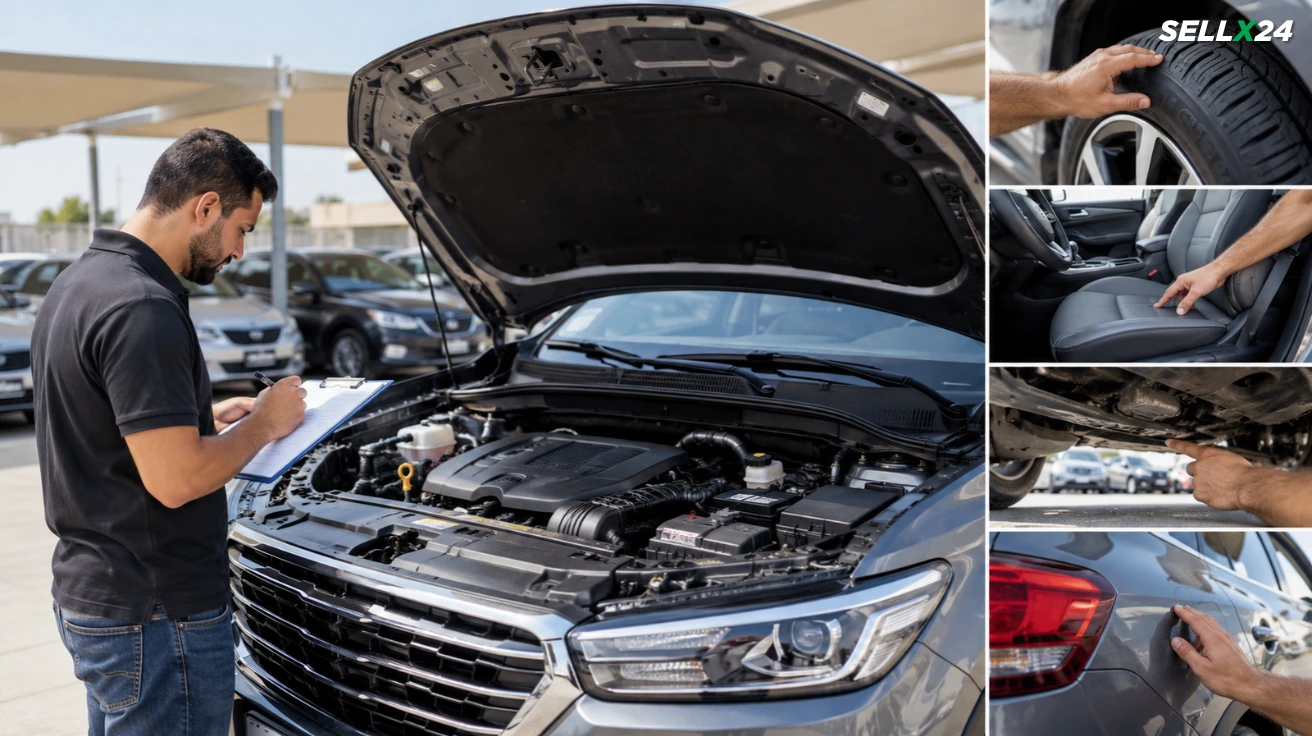
Most bad used car deals in India don't go wrong in the engine. They go wrong in paperwork nobody checked, a repainted door nobody noticed, or a test drive that lasted four minutes on an empty road. This used car inspection checklist covers the 25 points I'd check before handing over a single rupee of token money, grouped into papers, body, mechanicals, cabin and the drive.
Do the paper checks first. They take ten minutes on your phone and can end a bad deal before you waste a Sunday on it.
The Used Car Inspection Checklist Starts With Papers
-
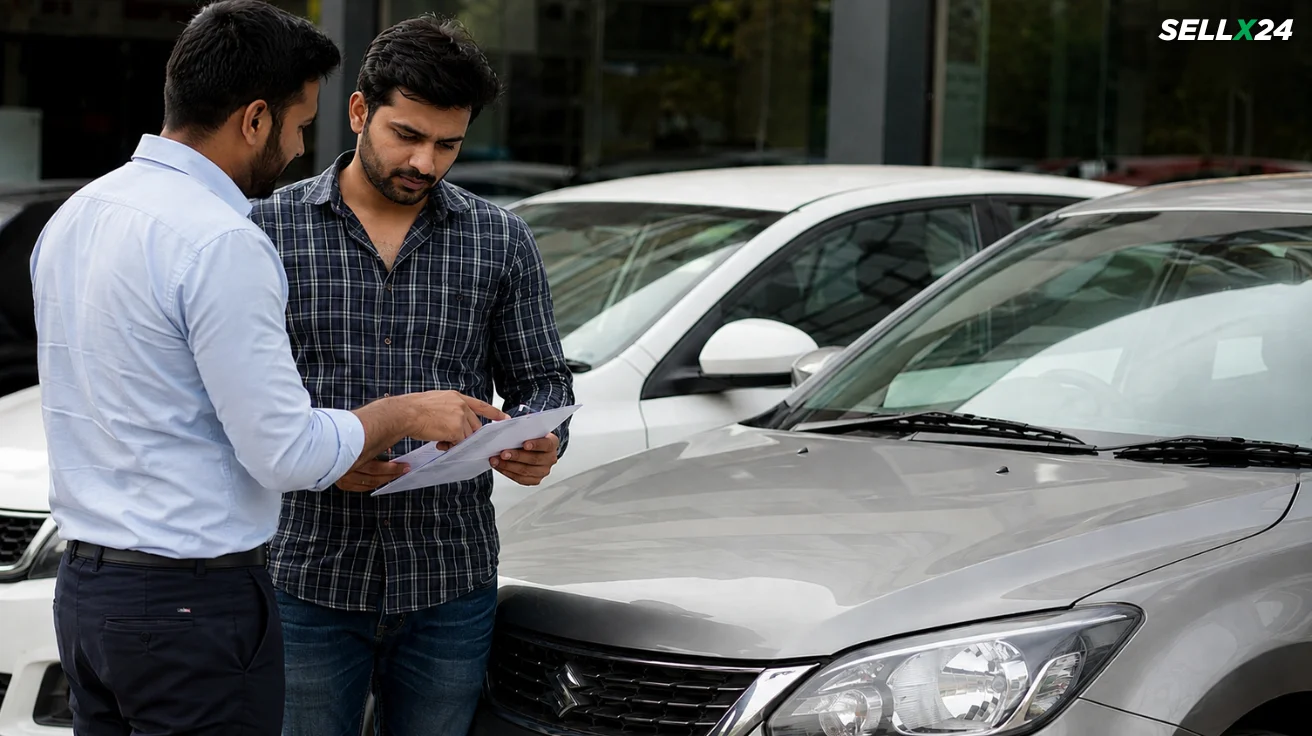
RC matches the car. Compare the chassis and engine numbers on the RC with the numbers stamped on the car and printed on its VIN plate. One wrong digit and you walk away.
-
Vahan record. Enter the registration number on the Parivahan portal or the mParivahan app. It shows owner serial number, fuel type, registration date, insurance and PUC validity, and any hypothecation or blacklist flag. If the seller's story and the government record disagree, believe the record.
-
Hypothecation. A financed car carries the bank's name on the RC. Ask for the bank's NOC and Form 35 signed by the lender. Without them, the transfer stalls.
-
Pending challans. Search the registration number on the Parivahan e-challan portal. Unpaid fines stay with the vehicle and can hold up the transfer, so the seller clears them before you pay.
-
Insurance and claims. Ask for old renewal papers. A lost no-claim bonus on a three-year-old car usually means an accident claim. The policy must move into your name within 14 days of the transfer.
-
PUC and CNG papers. Check PUC validity. On a CNG car, the fuel type must appear on the RC, and the cylinder needs a hydro test every three years at a PESO-approved centre. Look for the stamped test date and the certificate.
-
Service history. Ask for the service booklet or invoices. Authorised workshops can often pull records by registration number. A car with no records should cost noticeably less.
-
Transfer forms and age. Both of you sign Forms 29 and 30. The transfer must be applied for within 14 days in the same state and 45 days for an inter-state move, which also needs a Form 28 NOC. Fees and late penalties vary by state. Age matters too: renewing the registration of a car older than 20 years now costs ₹10,000 under MoRTH's August 2025 notification. In Delhi-NCR, older diesel and petrol cars face restrictions tied to their emission norm, and the Supreme Court is still hearing the matter.
These rules and fees are based on current data and can be changed anytime by the central government or state authorities. Confirm with your RTO before you sign.
Exterior and Body: Where Accident History Hides
-
Panel gaps. Run a finger along the gaps between bonnet and fenders, and between doors and pillars. They should be even on both sides of the car.
-
Paint. Look along the body in daylight, at an angle. A slightly different shade, rippled texture, or overspray on rubber beading means a respray.
-
Bolts and pillars. Check bonnet hinge and fender bolts for spanner marks. Pull back the door rubber and look for welding or filler on the pillars. A repainted door is cosmetic. A repaired pillar is structural, and I wouldn't buy that car.
-
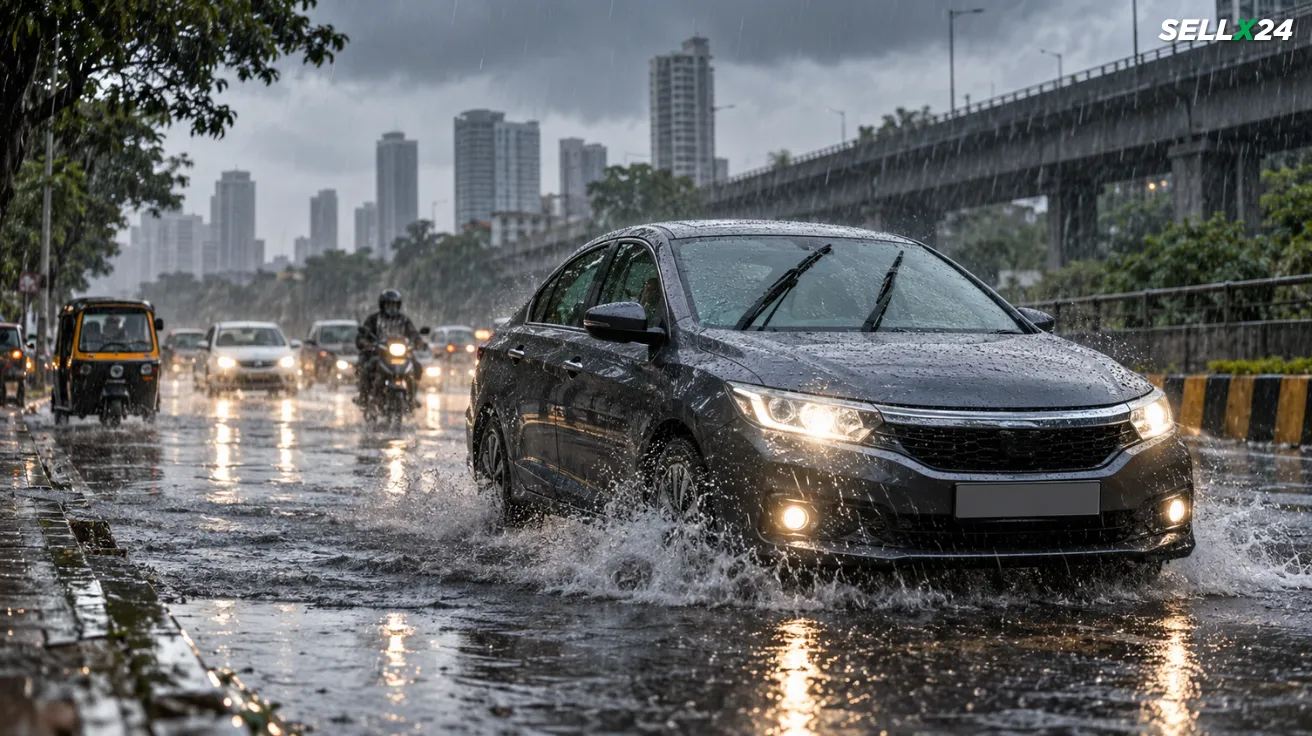
Rust and flood signs. Lift the floor mats and check the spare wheel well for rust or silt. A musty smell or water marks on seat rails in a car from a flood-hit city is reason enough to leave.
-
Tyres. The four-digit code on the sidewall gives the week and year: 2423 means week 24 of 2023. Wear on one edge points to alignment or suspension trouble.
-
Glass and lights. Original windows usually share the same brand logo and date code. One odd pane means a replacement. Moisture inside a headlamp suggests a cracked or refitted unit.
Under the Bonnet and Under the Car
-
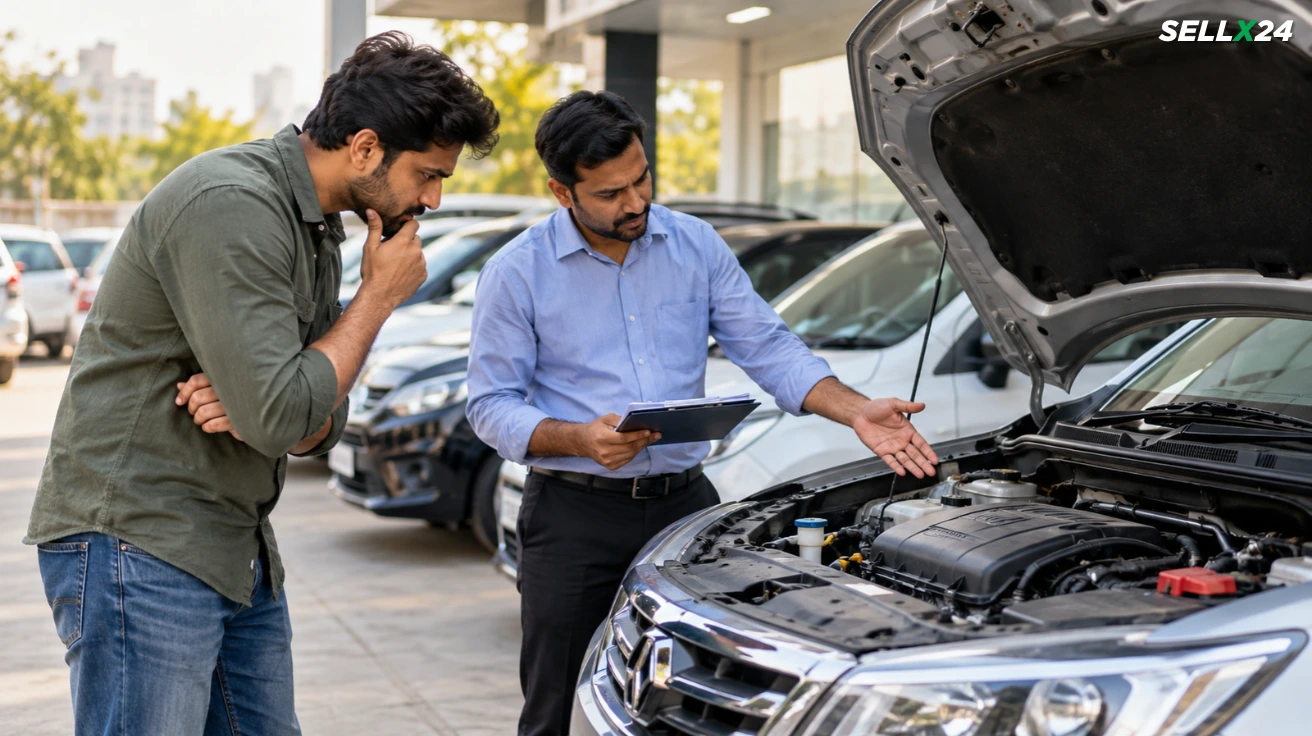
Cold start. Tell the seller not to run the car before you arrive, then touch the bonnet. A warm engine hides hard starting and smoke.
-
Fluids and leaks. Milky oil on the dipstick can mean coolant mixing in, a head gasket warning. Check coolant level and look under the parked car for fresh drips.
-
Exhaust smoke. Blue smoke means burning oil. White smoke that doesn't clear after warm-up suggests coolant. Constant black smoke means the engine is running rich.
-
Belts, hoses and battery. Look for cracked belts, swollen hoses and heavy corrosion on battery terminals.
-
Suspension and underbody. Press down on each corner; it should bounce once and settle. With a torch, look for oily shock absorbers and a scraped or bent sump.
Inside the Cabin
-
Odometer against wear. Odometer tampering is common, and digital clusters aren't immune. A car showing 40,000 km with a shiny steering wheel and worn pedal rubbers has done far more. Match the reading against service invoices.
-
Warning lights. With the ignition on, every warning light should glow, then go off once the engine starts. A light that never comes on may have been disconnected. A cheap OBD scanner reads stored fault codes.
-
AC and electricals. The AC should blow cold within a few minutes. Test windows, mirrors, central locking, wipers, horn, infotainment, reverse camera and every light.
-
Airbags and seatbelts. The airbag light must go off after start. Tug each seatbelt sharply; it should lock.
The Test Drive: How to Check a Used Car Before Buying It Properly
-
Drive for 20 minutes on mixed roads. Include traffic, a broken stretch, a slope and some speed. Listen for clunks over speed breakers and whining from the gearbox. A high clutch bite point means a worn clutch. Automatics shouldn't jerk or hesitate. The car should brake straight with no pedal shudder.
-
Independent mechanic. Even after 24 checks, pay a mechanic you trust or an authorised workshop to inspect the car before the final payment. It costs far less than one gearbox repair.
A proper second hand car inspection takes about two hours. Skipping it can cost you a year of repair bills, or a car you can't register in your name. Give the car you found on sellx24.com the same treatment as one from a cousin's colleague. Walk away from any seller who rushes you, refuses a cold start or won't let your mechanic look. There's always another car.