
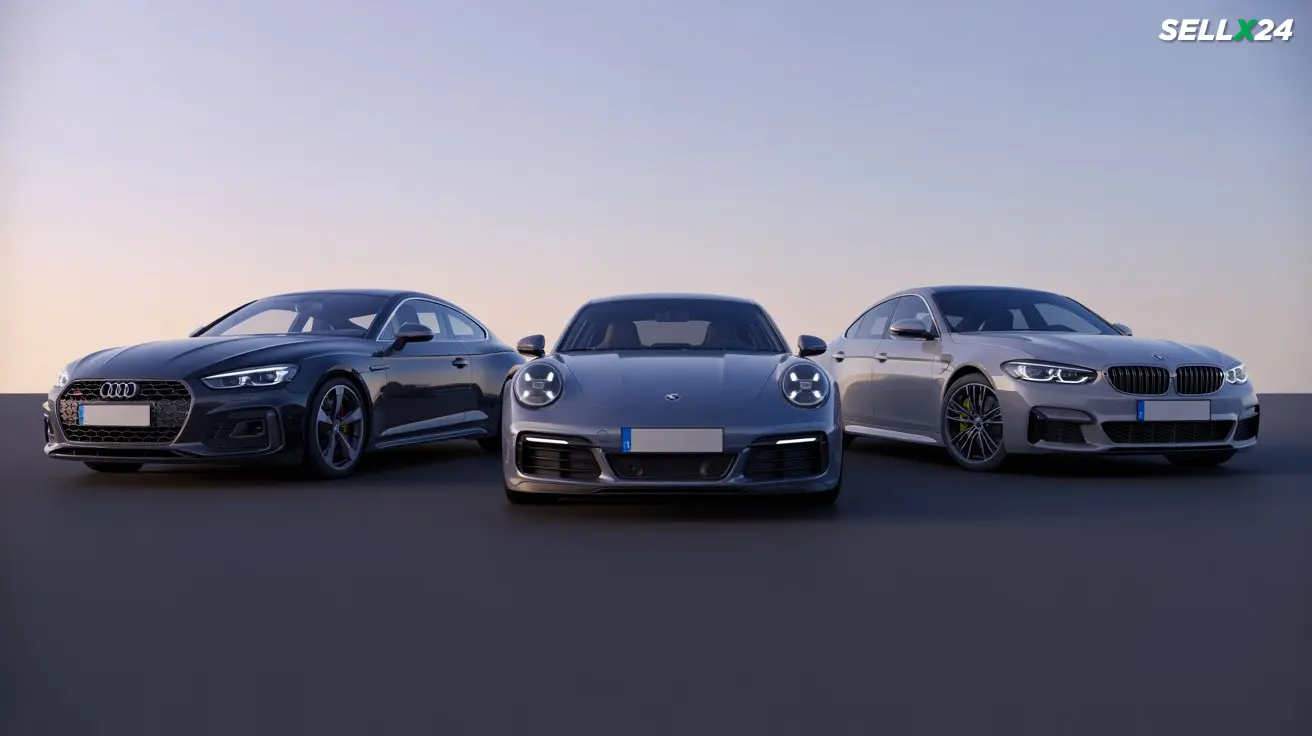
India is finally opening up its tightly protected car market. Under the new India–EU free trade agreement, New Delhi has agreed to slash import duties on European cars from 110% down to 40% initially, and then gradually down to 10% over the next few years. This is not just a small tweak, it’s the biggest opening of the Indian auto sector in decades, and it will change how luxury and premium cars are priced here.
What the deal actually says
India currently slaps a 70% customs duty on imported cars valued below about $40,000, and an effective duty of around 110% on high‑end cars above that threshold. On top of that, there are GST, cess, and other charges, which is why a ₹1.5 crore car abroad can easily cross ₹3 crore on Indian roads.
Under the new India–EU FTA, tariffs on cars imported from the European Union will be cut in phases, starting from 110% and going down to 10% over time. The sharp initial cut is being reported as 40% for a limited number of cars from the EU, specifically for combustion‑engine models above a certain price, likely around €15,000. Over the next five years, these duties will be reduced further, heading toward 10%.
How many cars are affected
This concession is not free for all EU cars, and it’s not unlimited. The deal introduces an annual quota: only about 250,000 EU cars per year will get the benefit of the reduced tariffs (phased from 40% toward 10%). Cars beyond this quota will continue to face the old high duties, so the government is still protecting the market from a flood of cheap imports.
Inside that quota, the tariff structure is tiered. Broadly, higher‑priced cars will be eligible for the deeper cuts, but the exact slabs and caps are still being worked out in detail. The idea is simple: make premium European cars more competitive, but without trashing the domestic market overnight.
What this means for you as a buyer
Here’s the thing: if you’ve ever priced a Mercedes, BMW, Audi, or Porsche in India, the headline is simple, they will become cheaper over time. A car that currently costs ₹2 crore on the road might eventually come into the ₹1.4–1.6 crore range, depending on the model and configuration.
However, “sooner” and “cheaper” are not the same. The 40% duty is the starting point, not the final price. The big drop to 10% is phased over five years, so the deepest discounts will appear gradually. Dealers will still have to cover their margins, logistics, and certifications, so imported cars won’t suddenly feel like mass‑market products.
If you’re in the ₹1.5–4 crore bracket and looking at a premium or luxury European car, the next 2–3 years will be worth watching closely. Prices will come down, but the real savings will show up as the deal moves toward 10% duties.
What happens to EVs?
Electric cars are treated differently, and this is intentional. For the first five years of the deal, completely imported EVs from the EU will not get the same tariff benefits as combustion‑engine cars. This is a deliberate policy choice: India wants to protect and encourage its homegrown EV makers like Tata Motors, Mahindra & Mahindra, and BYD India.
After five years, EVs will follow a similar path: duties will be reduced in phases, but only up to a certain number of units per year. The idea is not to keep EVs expensive forever, but to give Indian companies time to build scale, technology, and brand loyalty before facing a full assault from European EVs.
Impact on Indian carmakers and local assembly
Local premium brands like Mercedes, BMW, Audi, and Volvo will face a tougher game. These brands already assemble some models locally under CKD (completely knocked down) schemes to avoid the high import duties. With EU cars now coming in at much lower effective duties, the cost advantage of local assembly will shrink.
If a fully built car from Europe suddenly becomes close in price to a locally assembled one, both brands and buyers will start to rethink the math. Some models that were earlier planned for local production may instead be imported in greater numbers, at least for a few years.
What about the rest of the auto industry?
The deal is not just about cars; it’s about components, too. Tariffs on a wide range of auto parts will be reduced or phased out over 5–10 years, depending on the category. This is a big win for both Indian suppliers and European component makers.
Indian auto component exporters already do a lot of business with the EU, and zero or near‑zero duties will make that trade easier and more profitable. It also opens doors for European firms to source more parts from India, which could mean more joint ventures, tech transfers, and jobs in the supply chain.
Also Read: Top 10 Best Resale Value Cars in India
Long‑term effect on the Indian market
What this really means is that India is finally accepting that it cannot wall off its auto market forever. For years, the policy has been to protect domestic players with high duties, but that also kept prices high and limited choice.
With this FTA, India is betting that better competition will force everyone, local and foreign, to improve quality, efficiency, and pricing. In the short term, a few fully imported models will become noticeably cheaper. In the medium term, manufacturers will have to rethink their India strategies, from local production to pricing and product mix.
For buyers, the end result should be a wider range of premium cars, better value, and more options in the ₹1.5 crore and above segments. The real test, though, will be how fast the duty cuts are implemented and how carmakers choose to pass on the savings.